|
Cydney was awarded the 2024 J. Peter Brosius Integrative Conservation Research Award for their article, “At the extremes: Assessing interrelations among the impacts of and responses to extreme hydroclimatic events in Ceará, Northeast Brazil.” Cydney collaborated with Don, Nicolly Santos Leite, and Eduardo Sávio Martins (FUNCEME) on the article, which examines outcomes of and responses to extreme rainfall and flooding in 2023 in the semi-arid region of Ceará, Brazil and their relationships to adaptation measures to severe drought from 2012 to 2018 and prolonged drought impacts in the region. The article was recently published in Journal of Hydrology. https://doi.org/10.1016/j.jhydrol.2024.130850
0 Comments
Cydney was awarded the 2024 Graduate School Engaged Scholarship Award awarded by the Graduate School at UGA for their project “Community-Based Theatre Workshops to Address Socioenvironmental Problems and Create Solutions.” Cydney developed the initiative in collaboration with Ivaneide do Carmo Ferreira, an employee of the Municipal Secretariat of Education, Science, Technology, and Innovation of Quixeramobim, Ceará (SECTI), in order to promote creative ways to collectively think through local water-related issues in Quixeramobim and create possible solutions to these challenges. Students from three rural elementary schools, three urban elementary schools, the adult education program, and the adult literacy program of Quixeramobim participated in community-based theatre workshops, during which they explored their everyday relations with water.
HECLab postdoc Katie Foster was recently awarded the Excellence in Research Award by the Graduate School at the University of Georgia for her dissertation research on Indigenous land rights and mining conflicts in Peru. The award comes with a $1000 prize, and she will be recognized along with other honorees at the Graduate School Honors Luncheon this April.
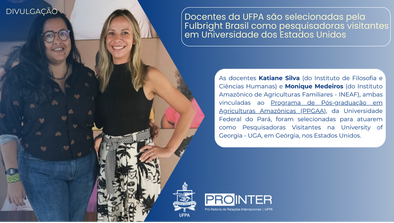 Prof. Katiane Silva and Prof. Monique Medeiros from the Federal University of Pará (UFPA) will join us during Spring 2025. Monique will be hosted by the Department of International Affairs and Katiane will be hosted by the HECLab. Katiane will be working on her most recent research activities exploring the socio-environmental conflicts that arise through demarcation of indigenous lands in Brazil. Their visit will continue our ongoing collaboration activities with the Instituto Amazônico de Agriculturas Familiares at UFPA.
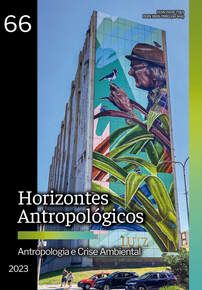 Don, along with friends and long-time collaborators, Profas. Cornélia Eckert and Ana Luiza Carvalho da Rocha, co-edited the most recent issue of Horizontes Antropológicos. The topic is on Anthropology and Environmental Crises and contains contributions of authors from across the Americas.  Victor won a competition for best book from A Arte das Palavras Publishers in Brazil, and will have his book published in October of this year! They ship to the US! www.aartedapalavraeditora.com/product-page/equidestransfigurar Don and multiple partners within UGA, Vanderbilt University, Oakridge Associated Universities, Southern University of New Orleans, and the Center for Rural Enterprise and Environmental Justice were recently awarded an NSF Planning grant "Collaborative Research and Education Center for Transformative Water Solutions". This one year grant will create the basis for a water center proposal that centers equity and justice in drinking water, wastewater, and stormwater solutions. We will kickoff with an opening workshop in October, 2023.
Cydney is a co-author on a publication now out in Climatic Change. "Migration as adaptation to freshwater and inland hydroclimatic changes? A meta-review of existing evidence" is a meta-review of migration as an adaptation to freshwater and inland water-related climate changes. The article draws on work that they did for Chapter 4 of the 2022 IPCC report.
Don and UGA colleague Marshall Shepherd are part of a team awarded a NOAA grant focused on improving use and outcomes of using climate forecasting information "Incorporating Principles of Environmental Justice into Forecast Informed Reservoir
Operations, a Climate and Flood Adaptation Strategy". The team is led by Tom Corringham at the Scripps Institute and UCSD. The work is focused on potential socioeconomic benefits of FIRO to frontline communities and how such benefits might be realized. The ultimate outcome of this project is to integrate assessment of the impacts of FIRO on frontline communities by developing a methodology that can be applied at different stages of the FIRO process that could be implemented nationally. |
HECLAB newsLearn about what we have been up to. Archives
February 2024
CategoriEs
All
|
 RSS Feed